

Commercial CCTV Installation in London: A Guide for Shops, Offices & Businesses
A business CCTV system has two jobs: it must produce useful security footage, and the organisation using it must manage that footage responsibly. This guide explains how London businesses can plan camera coverage, signage, retention, user access, staff monitoring and secure remote viewing before installation.
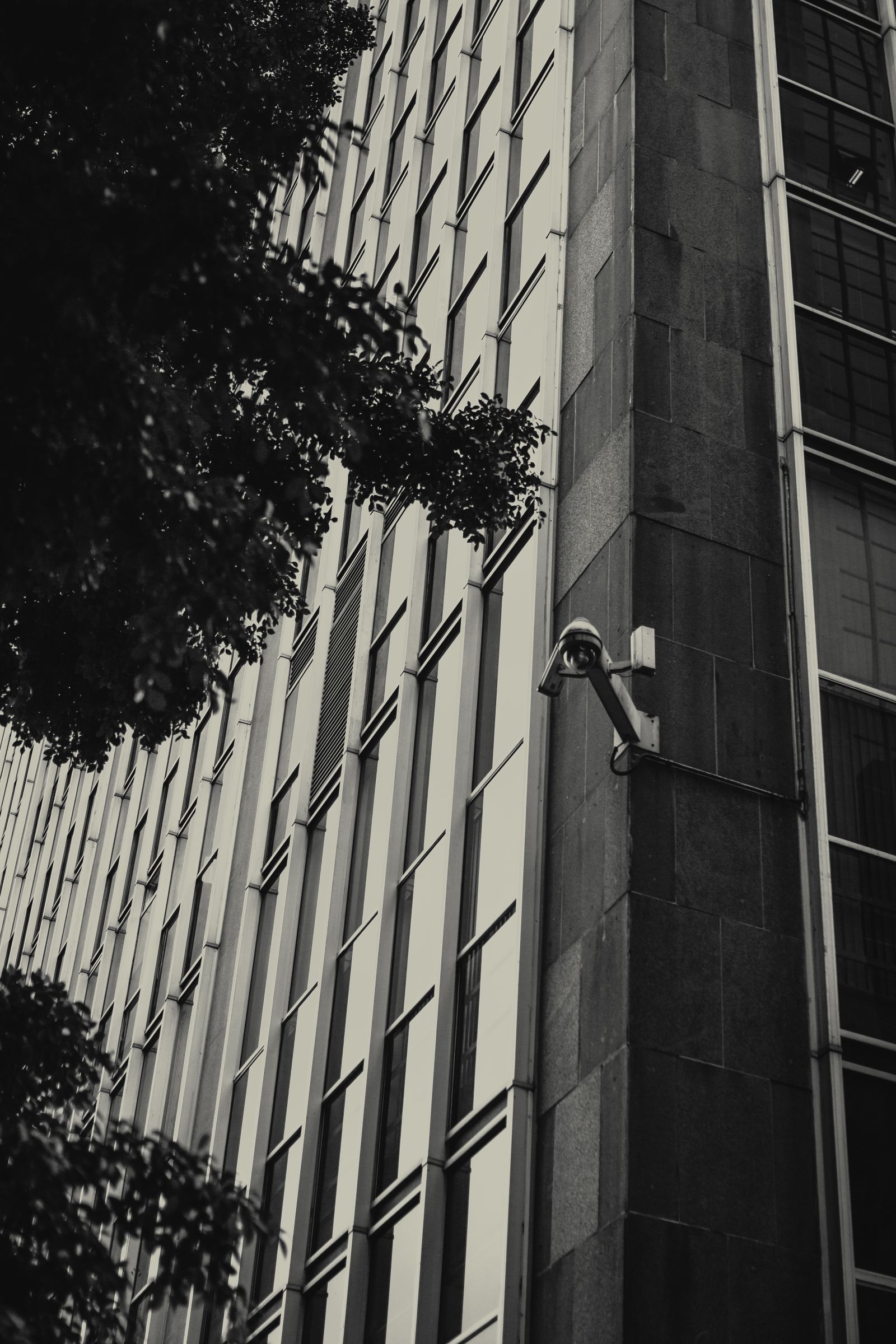
Security, access points, stock areas and incident evidence are different purposes and may need different views.
Camera quantity and image quality should follow the business need, not simply the maximum technical capability available.
The organisation operating CCTV needs rules for how footage is viewed, stored, retrieved and disclosed.
Remote viewing and network-connected cameras need appropriate passwords, permissions, updates and access controls.
Jump to a section
Commercial CCTV installation in London is not simply a residential system with more cameras. A shop, office, clinic, café, small warehouse or multi-area business can have multiple entrances, public-facing spaces, staff-only areas, stock, tills, yards and authorised users who need different levels of access.
HiTechno's current CCTV service page says its commercial layouts can be designed around entrances, tills, aisles, stockrooms and yards, with IP or HD-over-coax cameras, NVR/DVR recording, WDR for mixed lighting, secure remote access and per-user permissions. The organisation operating the system remains responsible for deciding why CCTV is needed and for meeting its own data-protection obligations.
What should a commercial CCTV installation include?
Start with the business purpose, then design the cameras and governance around it
A useful commercial CCTV plan should identify what the business needs to protect or record, where cameras can achieve that purpose, who may view footage, how long recordings are needed, and how people are told that CCTV is operating.
The ICO's current guidance for organisations makes the same basic point: technical capability should not replace transparency, accountability or proportionate data use. The system should process only the personal information necessary for its defined purpose.
CCTV can sit alongside other security measures rather than replacing them. ProtectUK describes CCTV and alarms as added protective measures and emphasises that systems should be reliable and fit for purpose.
Where should commercial CCTV cameras be placed?
There is no universal camera layout for every business. A retail shop, office, clinic and warehouse each create different sightlines, lighting conditions and privacy expectations. The diagram below shows common areas to assess rather than a fixed specification.
A — Entrances & exits
Useful for recording people entering and leaving, provided the camera can produce sufficient detail for the stated security purpose.
B — Customer / till areas
Potentially relevant for incidents and transactions, but the business should define why the area is monitored and keep the field of view proportionate.
C — Stock & equipment
Coverage can focus on access to valuable or restricted areas rather than recording unrelated staff activity.
D — Yards & loading areas
External approaches, gates and vehicle areas can need different cameras, lighting and recording detail from indoor areas.
HiTechno's live CCTV page specifically describes commercial coverage around entrances, tills, aisles, stockrooms and yards and says lenses and positions are selected around distance and lighting. That makes the survey stage more important than choosing a camera count in advance.
Define the purpose before choosing the camera
The ICO says the type of surveillance system and where it is used should achieve the specific purpose for which it is deployed. It also says organisations should identify the minimum amount of personal data needed to fulfil that purpose.
Protecting entrances
Prioritise a useful view of access activity rather than capturing a much wider public area than the purpose requires.
Protecting stock or equipment
Focus on relevant routes and restricted areas instead of using CCTV as general continuous staff observation.
Recording incidents
Image quality, time accuracy, storage and export capability matter if footage may need to be reviewed after an event.
Remote management
Multi-site or remote viewing adds user-permission and cyber-security decisions that are separate from camera placement.
Business CCTV and UK data protection: what changes?
Organisations using CCTV to process identifiable people's personal information need to comply with the UK GDPR and the Data Protection Act 2018. ICO guidance applies to both public- and private-sector organisations using video surveillance.
The ICO says its video-surveillance guidance is under review following changes made by the Data (Use and Access) Act, so organisations should check the current ICO pages when making compliance decisions.
Document why CCTV is needed
ICO guidance for small organisations says to record the reasons for CCTV, the areas covered, privacy impact and intended retention period.
Choose and document an appropriate lawful basis
The ICO says organisations need an Article 6 lawful basis. Legitimate interests may be appropriate in some situations, but the organisation must determine the basis that actually fits its processing.
Minimise the personal information collected
Camera positions, recording schedules and features should be limited to what is necessary for the defined purpose.
Tell people they are being recorded
Visible, readable signage should explain that CCTV is operating and provide appropriate operator/purpose/contact information.
Control access, retention and disclosure
Footage should be secure, access restricted, retention tied to purpose, and disclosures managed consistently with the reason the system was installed.
When might a CCTV DPIA be needed?
A Data Protection Impact Assessment is not simply a form that every small camera system automatically requires. The ICO says a DPIA is needed where CCTV use is likely to result in a high risk to people. Its small-business guidance gives examples including cameras in private areas or CCTV used to monitor staff.
Use a DPIA to challenge the design
A useful DPIA asks whether CCTV is necessary, whether a less intrusive option could achieve the purpose, which people may be affected, what data will be collected and what controls reduce the risks.
High privacy expectations need extra caution
Do not treat changing rooms, toilets, treatment spaces or other high-privacy areas as ordinary camera positions. ICO guidance warns that people may have a heightened expectation of privacy in such locations.
What should commercial CCTV signage include?
The ICO says organisations should make people aware of surveillance before they enter the monitored area. Signs should be clearly visible and readable and should identify the organisation operating the system, the purpose and basic contact details such as a website, telephone number or email address.
| Sign element | Why it matters | Practical placement |
|---|---|---|
| CCTV is in operation | People should be aware that surveillance is taking place. | Before or at the entrance to the monitored area. |
| Who operates it | People need to know which organisation is responsible for the system. | On the notice itself or through clearly linked privacy information. |
| Why CCTV is used | Transparency includes the purpose of recording rather than just announcing the presence of cameras. | Keep the wording concise and relevant to the actual purpose. |
| Contact details | People need a route to ask questions or exercise their data rights. | Website, telephone number or email address as appropriate. |
ICO small-business guidance specifically suggests visible signs in locations such as an office or shop window and says staff should know what to do if someone asks about the CCTV system.
Can a business use CCTV to monitor staff?
Staff monitoring is a more privacy-sensitive purpose than simply watching an external entrance. If CCTV is intended to monitor workers, the business should assess necessity, proportionality, transparency and whether a DPIA is required before relying on the cameras for that purpose. The ICO specifically identifies staff monitoring as an example that can create high risk.
Do not quietly change the purpose after installation
A system installed for perimeter or incident security should not automatically become a continuous staff-performance monitoring tool. ICO purpose-limitation guidance says personal information should only be reused for a new purpose when that use is compatible, based on consent, or supported by a clear legal obligation or function.
If a business is considering worker monitoring, covert surveillance, biometric recognition or other particularly intrusive uses, obtain specific data-protection advice and use the relevant ICO guidance rather than relying on a general CCTV installation article.
How long should a business keep CCTV footage?
The UK GDPR and Data Protection Act 2018 do not prescribe one universal minimum or maximum CCTV retention period. ICO guidance says the organisation's purpose should determine how long recordings need to be kept.
Set the retention period deliberately
Decide how long footage is genuinely needed for the business purpose rather than using the recorder's maximum capacity as the policy.
Restrict access
ICO guidance says live and recorded footage should be available only to authorised people who need it.
Make footage retrievable
The system should allow relevant footage to be located and exported in a suitable format when needed for rights requests or legitimate disclosures.
Control disclosure
Third-party access and copies should be managed rather than allowing unrestricted downloading or casual sharing.
HiTechno's live CCTV page says it can configure storage retention, evidence export and per-user access as part of a system. The business itself still needs to decide and document the policy that those settings implement.
Secure remote viewing is part of CCTV design
Remote access can be useful for owners, managers and multi-site teams, but an internet-connected camera system also becomes part of the organisation's cyber-security surface. The design should therefore control who can connect and how.
Four practical controls to include in the handover
The ICO also says surveillance footage should be stored securely and access restricted, and that networked or cloud storage needs appropriate safeguards.
Commercial CCTV should be tested in real lighting conditions
Shop windows, reception glass, loading-yard lights, vehicle headlights and dark stock areas can create very different images after closing time.
HiTechno's current CCTV page states that it works with true IR night vision and WDR and tunes cameras for mixed lighting such as shopfronts and lobbies. The useful test is whether the recorded image meets the business purpose at the time an incident is most likely to be reviewed.

Interactive commercial CCTV planning brief
This tool helps a business identify questions to take into a CCTV survey. It does not determine legal compliance, the number of cameras or the final equipment specification.
Build your commercial CCTV survey brief
Select the premises and CCTV objectives. The result highlights the technical and governance questions to discuss.
General planning tool only. The organisation remains responsible for its lawful basis, transparency, DPIA decisions, worker-monitoring obligations, retention and data-rights processes.
What should a commercial CCTV installation quote cover?
A useful quotation should make the proposed system understandable. It should separate the physical installation from the business policies the organisation itself must decide.
- ✓Camera locations and purpose. What each view is intended to achieve.
- ✓Camera specification. Enough detail to understand image quality, lens and lighting capability.
- ✓Recorder and storage. NVR/DVR capacity and the assumptions used for retention sizing.
- ✓Cabling and network work. PoE, switches, cable routes and any relevant network configuration.
- ✓Remote viewing and user permissions. Which roles will have live, playback, export or admin access.
- ✓Privacy features. Camera masks, restricted views or other controls where needed.
- ✓Testing. Day/night image checks and verification that date/time settings are accurate.
- ✓Evidence export. How authorised users can find and securely export recordings.
- ✓Handover and documentation. Clear user instructions and an explanation of system administration.
- ✓Any ongoing services or subscriptions. These should be clear rather than appearing later as unexpected costs.
If budget is a major part of the planning decision, our CCTV installation cost in London guide explains the physical factors that typically make a project simpler or more involved.
Frequently asked questions about commercial CCTV installation
Does a business need a lawful basis to use CCTV?
Yes, where the CCTV processes identifiable people's personal information. ICO guidance says organisations need to identify and document an Article 6 UK GDPR lawful basis. Legitimate interests may fit some private-sector uses, but businesses must determine the basis appropriate to their own processing.
Do businesses need CCTV signs?
ICO guidance says people should be told when surveillance is operating. Signs should be visible and readable and should communicate the operator, purpose and appropriate contact details.
How long should a business keep CCTV recordings?
There is no single UK GDPR retention period that applies to every CCTV system. The ICO says the retention period should be determined by the purpose for which the footage is processed.
Can CCTV be used to monitor employees?
Worker monitoring can be particularly privacy-sensitive. Businesses should assess necessity, proportionality, transparency and whether a DPIA is required. Do not silently repurpose a security system into continuous performance monitoring without assessing the data-protection implications.
Can a business record audio with CCTV?
ICO guidance says surveillance systems should not normally record conversations between members of the public and describes continuous audio as more privacy-intrusive than video. Audio should be disabled by default unless there is a specific, documented and proportionate justification.
Can managers view business CCTV remotely?
Remote viewing can be part of a commercial CCTV system, but access should be restricted to authorised users and protected with appropriate credentials, permissions and security controls. Avoid using one shared administrator login for everyone.
What camera areas should a shop consider?
Common areas to assess include entrances, customer areas, tills, aisles, stockrooms and external approaches. The final layout should follow the documented security purpose and avoid unnecessary coverage.
What camera areas should an office consider?
Offices may assess entrances, reception, external approaches, equipment or restricted-access areas. General monitoring of desks or staff working areas requires additional privacy consideration and should not be assumed necessary.
Does commercial CCTV need a DPIA?
Not every installation automatically requires one. The ICO says a DPIA is required where the proposed CCTV use is likely to create a high risk to people, and gives examples including surveillance in private areas or CCTV used to monitor staff.
Should CCTV footage be easy to export?
Yes. ICO guidance says organisations should be able to retrieve footage efficiently for rights requests, legitimate disclosures and further examination, while protecting third parties where necessary.
Can CCTV work with an intruder alarm?
CCTV and intruder alarms can serve complementary security purposes. The right integration depends on the site, alarm architecture and required notifications. For a broader overview, see our CCTV and intruder alarm installation guide.
Official guidance and sources used
- Information Commissioner's Office — CCTV and dashcams for small organisations
- Information Commissioner's Office — CCTV for your organisation: things you need to do
- Information Commissioner's Office — CCTV and video surveillance guidance
- National Cyber Security Centre — security-camera cyber-security guidance
- ProtectUK — alarms and CCTV security guidance
Current-status note: the ICO says its surveillance guidance is under review following the Data (Use and Access) Act. Businesses should check the current ICO guidance when setting or reviewing CCTV policies, particularly for worker monitoring, biometric technology, special-category data, criminal-offence data or other high-risk processing.
Need CCTV installed at a London business?
Tell HiTechno about the premises, entrances, customer or stock areas, lighting conditions and remote-viewing requirements. The installation can then be scoped around the site rather than a generic camera package.