
Home CCTV Laws UK: Neighbours, Pavements, Privacy & Recording Rules
Home CCTV is legal, but the rules change when a camera records beyond your private property boundary. This guide explains what London homeowners should know about neighbours, public areas, CCTV signs, footage requests, retention, audio recording, flats and planning rules in England.
If a domestic system only records within your private property boundary, the home-CCTV data-protection rules discussed below generally do not apply in the same way.
Recording neighbours, public space or communal areas brings the footage within UK data-protection rules.
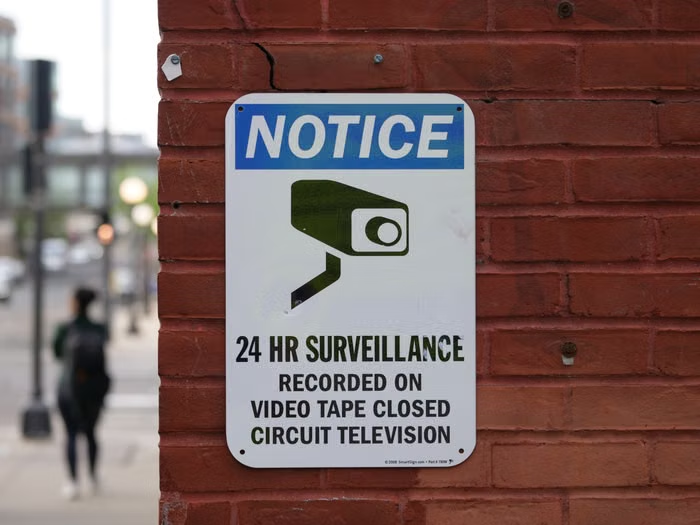
The ICO says signage is required where home CCTV records beyond the property boundary.
Official guidance says recordings should be deleted when they are no longer needed for the purpose of protecting the property.
Jump to a section
The most important legal distinction for home CCTV in the UK is the camera's field of view. If your system records only within your private domestic property boundary, the domestic-use position is different from a system that records people in a neighbour's property, a communal area, a pavement or the street.
Current GOV.UK guidance, updated on 21 May 2026, says that where domestic CCTV captures people outside your private property boundary, UK data-protection law applies and you become responsible for how those recordings are collected, stored, accessed and used. This article explains those responsibilities in practical terms. It is general information, not legal advice.
Is it legal to have CCTV at home in the UK?
Yes — but what your camera records matters
Home CCTV, smart doorbells and similar video-surveillance systems can be used to protect a property. If they record only within your own private domestic boundary, the household-use position is relatively straightforward.
If they record outside that boundary—for example a neighbour's home or garden, a shared landing, communal walkway, pavement or street—current ICO and GOV.UK guidance says data-protection law applies. You then have responsibilities relating to necessity, transparency, security, retention and the rights of people recorded.
Recording beyond your boundary is not automatically prohibited. The ICO's guidance focuses on whether you have a clear reason, whether the system captures more than it needs, and whether you operate it responsibly.
The property boundary is the key starting point
A useful way to understand domestic CCTV law is to separate the area you control from the areas used by neighbours or the public. The illustration below shows the distinction.
Recording stays inside your property
ICO organisational guidance excludes CCTV used purely for personal or household activity within private property from the wider surveillance guidance.
Recording extends beyond your property
Current ICO home guidance says data-protection rules apply when you record someone else's property, a public area or communal space.
Where possible, the ICO recommends pointing cameras away from neighbours' property, public areas and communal space. If some external capture is necessary, consider tighter camera angles and privacy masks or blockers.
For the practical installation side of this issue, see our home CCTV camera placement guide.
What are your responsibilities if CCTV records beyond your boundary?
The ICO's current home-CCTV guidance sets out several practical duties. They are easier to understand as a system-management checklist rather than just a privacy notice.
Have a clear reason
Be able to explain why the camera is needed, such as protecting a particular entrance, vehicle area or part of the property.
Minimise what you capture
Do not record a wider area, more people, or more audio than the security purpose genuinely requires.
Tell people CCTV is operating
The ICO says signage should indicate that CCTV is in operation where recording extends beyond the domestic boundary.
Protect access to recordings
Keep recordings secure and limit access to people who genuinely need it.
Delete footage regularly
Do not retain recordings simply because storage is available. Keep them only for as long as your security purpose needs them.
Handle people's requests
If someone appears in your footage, current ICO guidance says you must be able to respond appropriately to requests for their recordings.
GOV.UK also says the system owner is responsible for making sure the CCTV is installed correctly, for the information recorded, and for ensuring that footage is used for the purpose for which the system was installed.
Do you need a CCTV sign at home?
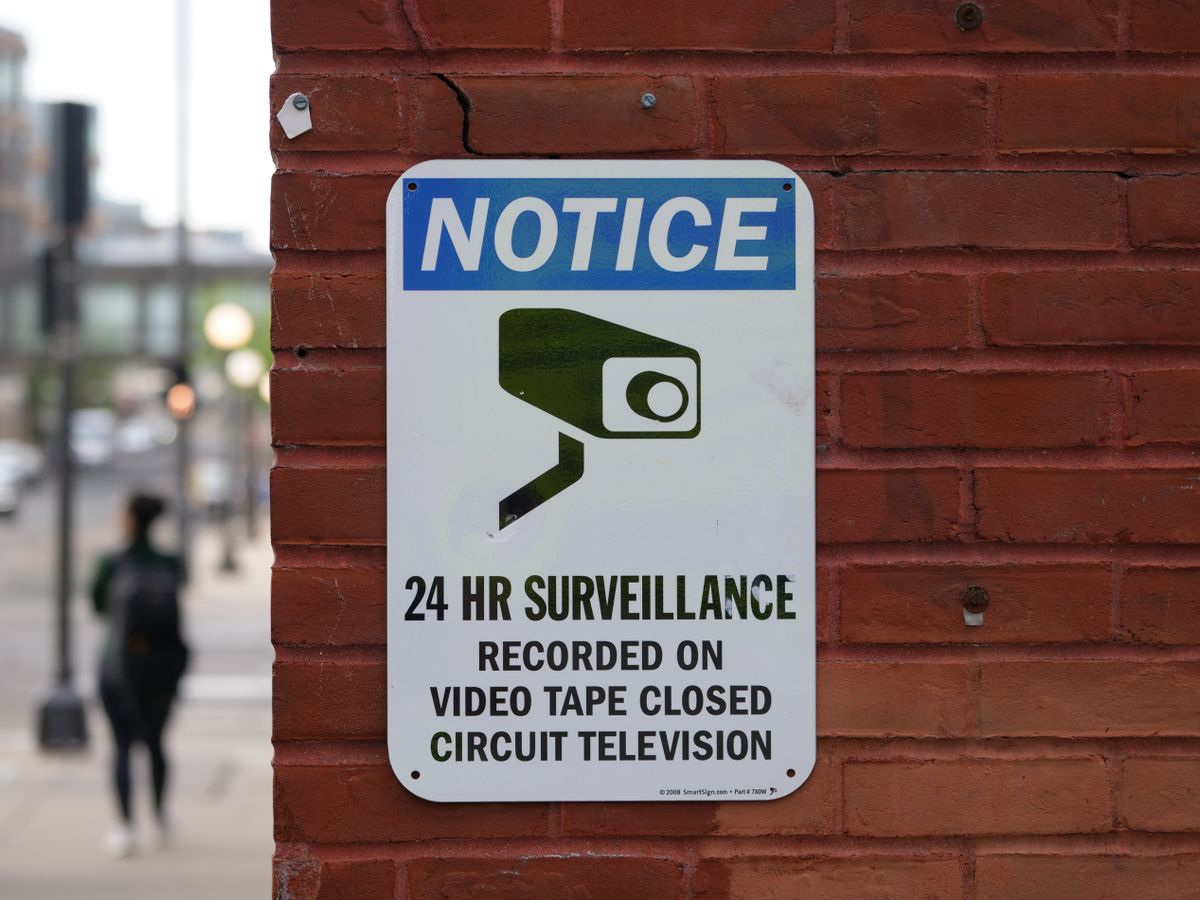
If your domestic CCTV records beyond your property boundary, the ICO says you must let people know CCTV is being used, for example by displaying a sign.
GOV.UK also advises homeowners to be transparent with people around them and specifically suggests informing neighbours and putting up a notice that recording is taking place.
If the camera only records within your private boundary, the same data-protection requirement does not arise in the same way. Even then, clear communication can help avoid unnecessary disputes.
What should a domestic CCTV sign communicate?
The official domestic guidance does not prescribe a single universal sign design for every household. The practical aim is that people can see that recording is taking place. Place a notice where it can be seen before or as someone enters the area being recorded.
Can your CCTV record a neighbour's property or the pavement?
A small amount of unavoidable external capture can happen with real properties, particularly terraced houses, front doors close to pavements, shared driveways and narrow London streets. The key issue is whether the capture is necessary and proportionate.
| Camera view | What current guidance means in practice | Useful design response |
|---|---|---|
| Your own front path and door | If the image stays within your private boundary, the domestic household-use position is relatively straightforward. | Still position the camera for the useful security view rather than unnecessary width. |
| Public pavement or street | Data-protection law applies where people outside your property boundary are recorded. | Reduce public-space capture where practicable and document why any remaining view is needed. |
| Neighbour's garden or windows | The ICO says cameras should be pointed away from another person's property where possible. | Change the angle, reduce field of view or apply privacy masking. |
| Shared driveway or communal walkway | Communal space is specifically treated as recording beyond the domestic boundary for data-protection purposes. | Minimise the recorded area, use signage and consider property-management or lease restrictions as well. |
GOV.UK recommends thinking about how neighbours will feel about the system and being transparent with them. In many cases, showing a neighbour the actual camera view can resolve concerns more effectively than debating where the camera appears to be pointing.
Can someone ask you for CCTV footage of themselves?
Yes, where data-protection law applies to your domestic CCTV. The ICO says that in most cases you must be able to provide some of the recording if a person asks for footage containing their image or audio. GOV.UK likewise says homeowners need to understand data-protection rights and respond appropriately to subject access requests from people they record.
Do not solve one privacy problem by creating another
A recording requested by one person may also contain neighbours, visitors, vehicle registrations or other identifiable people. Handling a request can therefore require care so you do not unnecessarily disclose someone else's personal information. If a request is complex or disputed, use current ICO guidance or seek legal advice rather than guessing.
This is also a practical reason to understand your recorder or camera app. GOV.UK recommends asking an installer to show you how to operate the system and export footage when required.
How long can you keep home CCTV footage?
There is no single universal number of days in current domestic guidance that every homeowner must use. Instead, both the ICO and GOV.UK focus on necessity: delete recordings regularly or automatically and do not keep information longer than is needed to protect the property.
Better retention question
Ask: how long do I genuinely need recordings for my security purpose? Then configure the recorder or cloud system around that answer and review it periodically.
Avoid indefinite storage by default
Large hard drives and cloud plans can make long retention technically easy, but extra storage does not automatically make longer retention necessary or appropriate.
Can you post CCTV footage on social media?
Current GOV.UK domestic guidance says recorded information should be used only for the purpose for which the system was installed and gives sharing recordings on social-media sites as an example of inappropriate use. Before publicly sharing identifiable footage, consider the privacy and legal consequences rather than assuming that owning the camera gives unrestricted rights over the recording.
Sharing relevant footage privately with police in connection with an investigation is a different context. GOV.UK notes that CCTV recordings may, in certain circumstances, be used as evidence by police.
What are the rules on recording audio with home CCTV?
Cameras and smart doorbells increasingly include microphones, but video and audio should not be treated as the same privacy decision. Voices can reveal substantially more information than an image of someone walking past a property.
Before enabling a microphone, ask three separate questions
HiTechno's current CCTV service page states that microphone deployment is used only where appropriate and lawful. For most domestic designs, treat audio as an additional privacy decision rather than a default camera feature.
Flats, tenants and communal areas: there may be more than one set of rules
Data protection is only one part of the picture. If you rent a home, live in a leasehold flat or want to attach a camera to a communal wall, your tenancy, lease, landlord, freeholder or managing agent may impose additional conditions.
Private homeowner
Focus on boundary capture, data-protection responsibilities, planning rules and whether the physical installation affects a listed or sensitive building.
Tenant
Check the tenancy agreement and ask the landlord where fixing equipment, drilling, wiring or altering the exterior requires permission.
Flat / leasehold property
Shared walls, corridors, entrances and external façades can be communal property. Check the lease or managing agent's rules before installing fixed equipment in those areas.
Some London social landlords publish their own CCTV/doorbell-camera permission rules for tenants and leaseholders. Those local property-management rules are separate from the general ICO data-protection rules and may be stricter about communal areas or attaching equipment to the building.
Interactive: which CCTV rules should you check?
Use this as a planning prompt before installing or repositioning cameras. It does not determine legal compliance and is not a substitute for current official guidance or legal advice.
Home CCTV rule checker
Select the features that describe your planned setup. The result highlights the rules and questions most relevant to review.
This tool is general guidance only. It does not assess your exact camera view, lease, planning history, local restrictions, lawful basis, data-rights request or other legal facts.
Planning permission for home CCTV in London
Planning law is separate from data-protection law. In England, security CCTV can fall within permitted-development rights under Part 2, Class F of the General Permitted Development Order, but only within specific limits.
Current Class F limits in England
These limits matter if you are relying on the security-CCTV permitted-development right.
Class F does not permit the camera where the building is listed or is a scheduled monument.
The camera housing must not exceed 0.75m × 0.25m × 0.25m.
Any part of the camera must not be less than 2.5m above ground level.
The camera must not project more than 1m from the surface of the building.
No part of one camera may be less than 10m from another camera installed on a building.
No more than four cameras on the same side of the building and no more than sixteen cameras on the building.
Class F also requires cameras, so far as practicable, to be positioned to minimise their effect on the building's external appearance and removed when they are no longer needed for security.
Planning Portal describes planning permission as not normally required where CCTV stays within the relevant rules, but warns that local restrictions and property status may change the position. If in doubt, check with the relevant London borough before work starts.
A practical home CCTV privacy checklist
- ✓Define the security purpose. Know what area or problem each camera is intended to address.
- ✓Check the actual field of view. Do not judge privacy only from where the camera appears to point.
- ✓Minimise external capture. Tighten the angle or use privacy masking where possible.
- ✓Use visible signage when recording beyond your boundary. Make it clear CCTV is operating.
- ✓Secure access. Protect apps, recorder accounts and footage from unnecessary access.
- ✓Set a proportionate retention period. Delete footage once it is no longer needed.
- ✓Know how to export footage. You may need to respond to a legitimate request or provide evidence.
- ✓Treat audio separately. Do not enable a microphone just because the device includes one.
- ✓Check property permissions. Tenants and leaseholders may need consent before fixing equipment to a building.
- ✓Review planning restrictions. Especially for listed, sensitive or unusually configured properties.
- ✓Re-check the camera periodically. Vegetation, moved furniture, building work or camera movement can change what is recorded.
HiTechno's current North London CCTV service includes privacy masking, retention setup, evidence export and signage guidance among its CCTV configuration options. If you are planning a new installation rather than reviewing an existing system, start with our CCTV & intruder alarm installation guide.
Frequently asked questions about UK home CCTV laws
Is it legal to have CCTV outside your house in the UK?
Yes. Home CCTV can be used for property security. If it records beyond your private domestic boundary, current ICO and GOV.UK guidance says data-protection law applies and you must operate the system responsibly.
Can home CCTV point at a public pavement?
It may be possible to capture some public space where it is necessary for the security purpose, but recording outside your property boundary brings the system within data-protection rules. The ICO says you should not capture more than you need and should point cameras away from public space where possible.
Can my CCTV record my neighbour's garden?
The ICO recommends pointing cameras away from another person's property where possible. If some capture is necessary, minimise it using a tighter field of view or privacy masking and comply with the relevant data-protection responsibilities.
Do I need a CCTV sign at my house?
If your domestic CCTV captures beyond your private property boundary, the ICO says you must let people know CCTV is being used, for example by displaying a sign. GOV.UK also recommends transparency with neighbours and visible notices.
How long can I keep home CCTV footage?
Current domestic guidance does not set one universal retention period for every household. The ICO and GOV.UK say footage should be deleted regularly and should not be kept longer than is necessary for the purpose of protecting the property.
Can a neighbour ask me for CCTV footage of themselves?
Where data-protection law applies, people recorded by the system have data rights. The ICO says you should be able to respond appropriately to requests for footage from people who appear in the recording.
Can I put CCTV footage of a suspected offender on social media?
Do not assume that owning the camera gives you unrestricted rights to publish identifiable footage. Current GOV.UK domestic guidance says recordings should be used only for the purpose for which the system was installed and gives social-media sharing as an example of inappropriate use. Consider reporting relevant footage to police instead.
Can a home CCTV camera record audio?
The fact that a camera contains a microphone does not mean audio should automatically be enabled. GOV.UK guidance specifically asks homeowners to consider whether audio is needed. Audio can capture considerably more private information, so the necessity and privacy impact should be considered separately.
Do CCTV laws also apply to smart doorbells?
Yes. Current ICO and GOV.UK home-surveillance guidance includes video-equipped doorbells and similar devices. The same boundary and personal-information issues can arise when they record people outside your private property.
Do tenants need permission for CCTV?
Data-protection law does not replace tenancy or property rules. If equipment will be fixed to the building, drilled, hard-wired or attached to a shared area, check the tenancy agreement and obtain any landlord or property-manager consent that is required.
Do I need planning permission for CCTV in London?
In England, security CCTV may fall within Part 2 Class F permitted-development rights if the installation stays within the relevant limits. Listed buildings, camera dimensions, minimum height, spacing, projection and camera counts are among the restrictions. Local rules can also matter, so check with the relevant borough if the position is unclear.
Official sources and current guidance
- GOV.UK — Guidance on the use of domestic CCTV, updated 21 May 2026
- Information Commissioner's Office — Home CCTV systems
- Information Commissioner's Office — Data (Use and Access) Act 2025 information for the public
- Planning Portal — CCTV planning guidance for England
- Legislation.gov.uk — General Permitted Development Order 2015, Schedule 2 Part 2
Update note: the ICO states that its home-CCTV guidance is under review following changes made by the Data (Use and Access) Act. The ICO separately confirmed on 19 June 2026 that all data-protection provisions of the Act were in force. Check the linked official guidance for the latest position before relying on this article for a specific dispute or legal decision.
Planning home CCTV in North London?
Tell HiTechno what areas you want to protect and any concerns about neighbours, pavements or shared access. Camera angles, privacy masking, retention and secure user access can be considered as part of the installation design.